September 18, 2026 · by Lacy
How to tell real amber from imitation
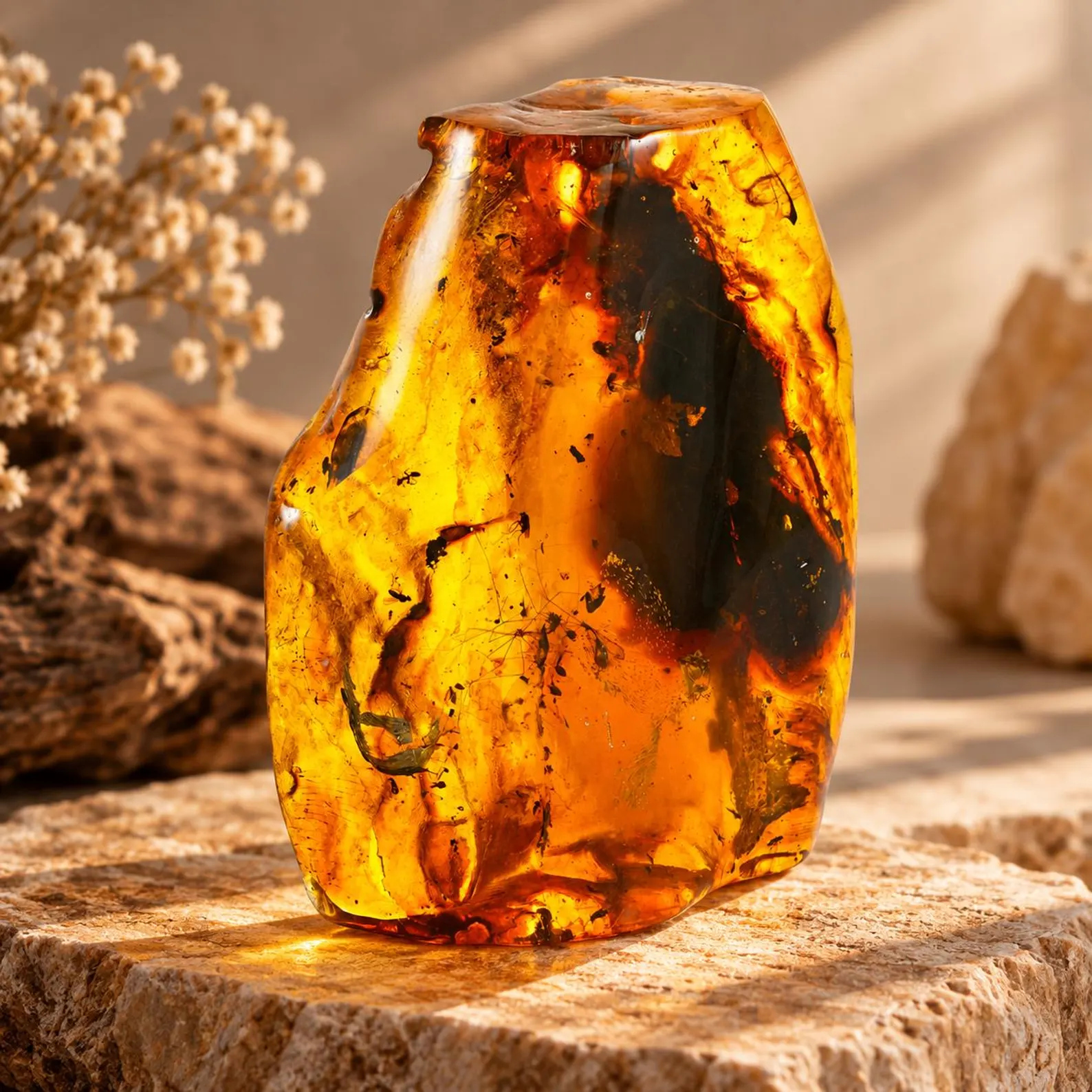
After thirty years of buying amber, I still check every stone before it goes in the basket. Plastic, glass and young resins like copal can all look a lot like amber. Here are the simple checks I trust most. None of them is perfect on its own, so I always use more than one.
Feel the warmth and weight
Real amber is very light and feels warm in your hand almost right away. Glass feels cold and heavy by comparison. A whole strand of amber beads should feel surprisingly light for its size.
The salt water test
Stir about seven heaping teaspoons of salt into a cup of warm water until it stops dissolving. Loose amber will float, while glass and most plastics sink. Only try this with loose stones or beads strung on cord that can get wet, never with pieces set in metal or glued. Rinse in fresh water afterward.
Look under ultraviolet light
Under a small UV flashlight, Baltic amber usually glows a soft blue, white or greenish colour. Glass does not glow this way. Some plastics fluoresce too, so treat this as a clue rather than proof.
Static
Rub amber briskly on wool and it picks up a static charge strong enough to lift a tiny scrap of paper. The ancient Greek word for amber, ēlektron, is where our word “electricity” comes from.
When in doubt, ask
The only definitive answers come from a gemological lab. Every stone we sell is natural Baltic amber. Where a colour has been enhanced with heat and pressure, as most cherry and green amber is, we say so on the product page.